

Table of Contents
Understanding your cat’s behavior is the first step toward building a strong, positive relationship with your feline companion. While cats are often seen as independent, they communicate constantly through body language, vocalizations, and actions. Learning to interpret these signals and applying effective training techniques can help reduce unwanted behaviors, prevent stress, and create a harmonious home environment.
This guide covers cat behavior and training, from understanding natural instincts to teaching simple commands and addressing common issues. Whether you’re a first-time cat owner or looking to improve your current approach, these tips will help you communicate with your cat effectively and strengthen your bond.
Understanding Cat Behavior and Training

Before you can train a cat effectively, it’s essential to understand their natural instincts and ways of communication. Unlike dogs, cats are more independent, and their behavior is often influenced by curiosity, territorial instincts, and mood. Recognizing these patterns makes training easier and reduces frustration for both you and your cat.
Natural Cat Instincts
Cats are instinct-driven animals, and many behaviors stem from their hunting, territorial, and survival instincts.
Common instincts include:
- Scratching: Marks territory and keeps claws healthy.
- Hunting/Playing: Pouncing, stalking, and batting toys mimic hunting behaviors.
- Climbing: Provides safety, observation points, and mental stimulation.
- Territorial Behavior: Cats may guard favorite spaces or react strongly to changes in their environment.
Understanding these instincts helps you guide behaviors instead of punishing them.
How Cats Communicate
Cats communicate primarily through body language and vocalizations. Reading these signals is critical for successful training.
Key communication cues:
- Tail Position: High tail indicates happiness, puffed tail shows fear or aggression.
- Ears and Eyes: Forward ears indicate interest; flattened ears signal fear or irritation. Slow blinking is a sign of trust and affection.
- Vocal Sounds: Meowing, purring, hissing, or growling all convey different messages depending on context.
- Posture: Relaxed body shows comfort; crouching or hiding may indicate stress or fear.
By interpreting these signals, you can respond appropriately, reinforce positive behavior, and prevent conflicts.
Understanding cat behavior and communication lays the foundation for effective training, making it easier to teach commands, modify unwanted behavior, and ensure your cat feels safe and understood.
EXTRA -YOU CAN READ ABOUT Basic Cat care Tips BY VISIT MY BLOG
Basic Cat Training Techniques
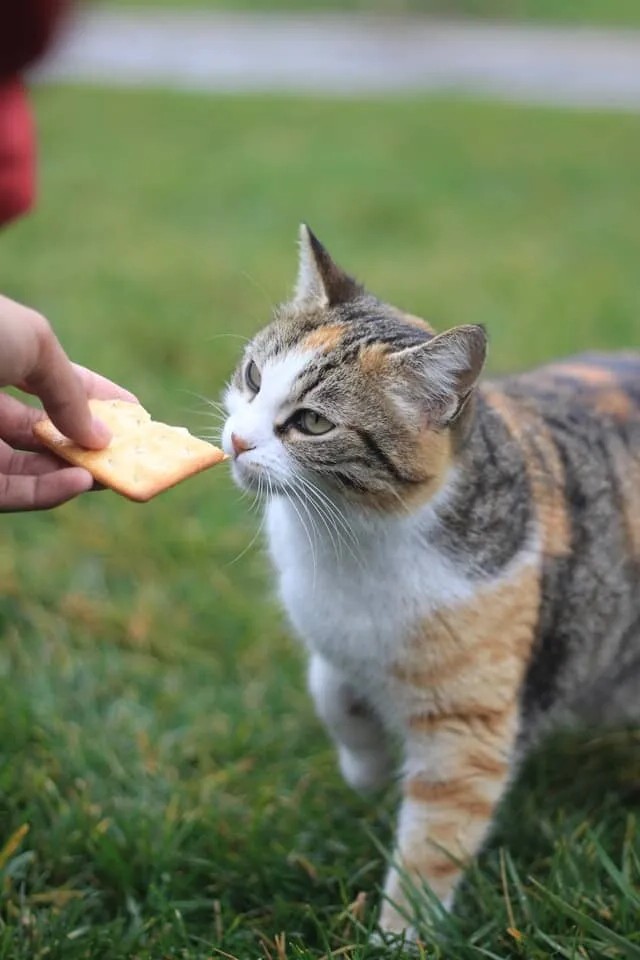
Training a cat may seem challenging, but with patience, consistency, and understanding of their natural behavior, you can teach them essential skills and good habits. Unlike dogs, cats respond best to positive reinforcement rather than punishment.
Litter Box Training
Litter box training is often the first step in cat training and usually comes naturally for kittens, but guidance helps avoid problems.
Tips:
- Place the litter box in a quiet, accessible location.
- Use unscented, clumping litter to encourage use.
- Clean the box daily and change litter regularly.
- Reward your cat with gentle praise or treats when they use the box correctly.
Teaching Simple Commands
Cats can learn basic commands, such as responding to their name, “sit,” or “come,” especially when motivated by treats.
Tips:
- Keep training sessions short (5–10 minutes) to maintain focus.
- Use a consistent command and hand signal for each behavior.
- Reward immediately after the desired behavior to reinforce learning.
- Repeat daily to build reliability.
Positive Reinforcement Training
Rewarding good behavior strengthens the bond and encourages repetition. Avoid punishment, which can create fear and mistrust.
Methods:
- Use small treats or favorite toys as rewards.
- Offer verbal praise and gentle petting as positive reinforcement.
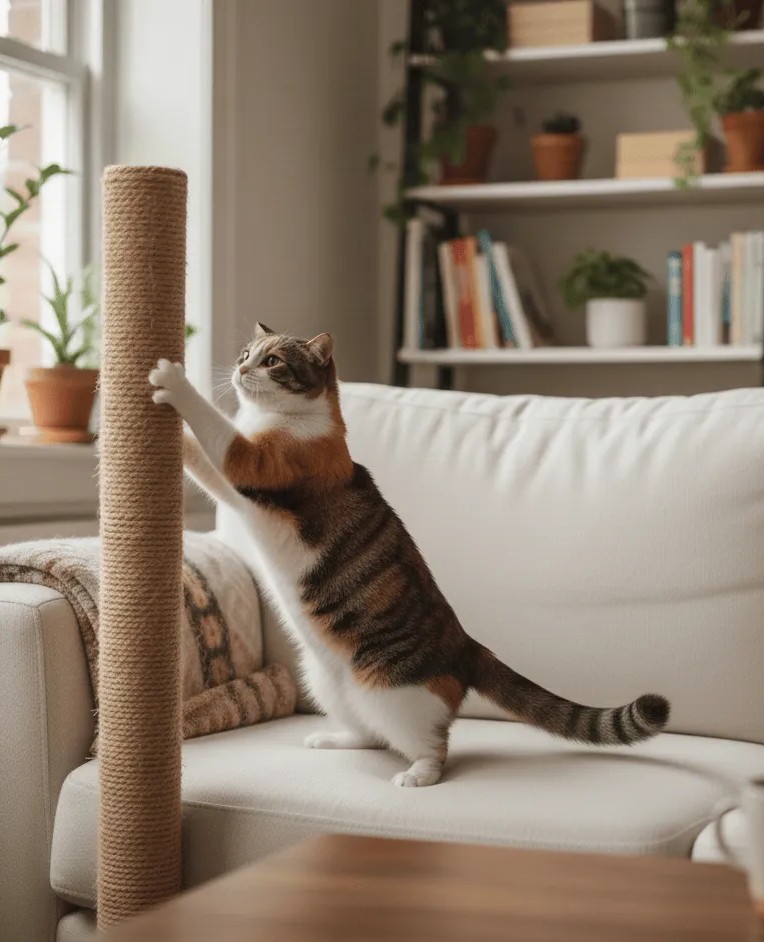
- Redirect unwanted behaviors rather than scolding. For example, if your cat scratches furniture, guide them to a scratching post and reward use.
By applying these basic cat training techniques, owners can guide their cat’s behavior effectively, reduce stress, and build a trusting relationship that lasts a lifetime.
Correcting Common Cat Behavior Problems
Even well-cared-for cats can develop unwanted behaviors. Understanding why these behaviors occur and addressing them with patience is key to successful training. Punishment rarely works; instead, use redirection and positive reinforcement.
Scratching Furniture
Scratching is a natural behavior that helps cats maintain their claws and mark territory.
How to Correct:
- Provide scratching posts or pads in areas your cat frequents.
- Use catnip or toys to encourage use of scratching posts.
- Discourage furniture scratching by covering surfaces with protective sheets or double-sided tape.
- Reward your cat when they use appropriate scratching outlets.
Biting and Aggression
Cats may bite due to fear, overstimulation, or play aggression.
How to Correct:
- Learn your cat’s warning signs (tail twitching, flattened ears, dilated pupils).
- Avoid rough play with hands; use toys instead.
- Give your cat space if they show signs of stress or agitation.
- Reward calm, non-aggressive behavior.
Excessive Meowing
Persistent meowing can indicate attention-seeking, hunger, stress, or health issues.
How to Correct:
- Respond to meows only when appropriate (e.g., feeding time) to avoid reinforcing attention-seeking behavior.
- Ensure your cat’s basic needs—food, water, litter, and comfort—are met.
- Provide enrichment, toys, and playtime to reduce boredom.
- Consult a veterinarian if excessive meowing may indicate illness.
Addressing these common cat behavior problems consistently and gently improves your cat’s habits, reduces household stress, and strengthens the bond between you and your feline companion.
Socialization and Environmental Enrichment

A cat’s behavior is greatly influenced by their environment and social interactions. Proper socialization and enrichment help reduce stress, prevent behavioral problems, and encourage mental and physical well-being.
Socializing Kittens and Adult Cats
Early socialization helps cats become confident and well-adjusted.
Tips for Kittens:
- Introduce gentle handling and exposure to new sounds, people, and environments.
- Encourage positive experiences with other pets under supervision.
Tips for Adult Cats: - Gradually introduce new people or animals to avoid stress.
- Use treats, toys, and praise to create positive associations.
- Respect your cat’s boundaries and avoid forcing interaction.
Mental Stimulation and Play
Cats need daily mental and physical stimulation to stay happy and healthy.
Tips:
- Offer a variety of toys, puzzle feeders, and interactive play sessions.
- Rotate toys regularly to maintain interest.
- Provide climbing structures, scratching posts, and cozy resting spots.
- Encourage problem-solving and hunting instincts with safe, indoor games.
A stimulating and enriched environment not only prevents boredom and destructive behavior but also strengthens the bond between you and your cat, making training more effective and enjoyable.
Common Cat Training Mistakes to Avoid
Even the most well-meaning cat owners can make mistakes that slow progress or cause stress for their cats. Avoiding these errors ensures training is effective and your cat remains confident and happy.
Using Punishment
Punishing a cat for unwanted behavior can lead to fear, aggression, or distrust.
Tip:
- Focus on redirection and positive reinforcement instead.
- Reward desired behavior rather than punishing mistakes.
Inconsistency
Cats learn best when training is consistent. Changing rules or expectations confuses them.
Tip:
- Keep commands, routines, and rewards consistent.
- Ensure all family members follow the same rules.
Impatience
Cats learn at their own pace; expecting instant results can lead to frustration.
Tip:
- Break training into short, frequent sessions.
- Celebrate small successes and progress gradually.
Neglecting Environmental Enrichment
A boring environment can lead to destructive or aggressive behavior.
Tip:
- Provide toys, climbing spaces, and interactive playtime daily.
- Rotate toys and challenges to keep your cat engaged.
By avoiding these common mistakes, you create a supportive learning environment that fosters effective cat behavior and training, strengthens your bond, and encourages long-term positive habits.
you can read more about Common Cat Training Mistakes to Avoid by visit this site
Conclusion & Call-to-Action
Understanding your cat’s behavior and using effective training techniques are essential for creating a harmonious and stress-free home. By learning their natural instincts, interpreting their body language, applying positive reinforcement, and providing mental stimulation, you can prevent common behavior problems and build a strong, trusting bond with your feline companion.
Call-to-Action: Start implementing these cat behavior and training tips today to improve communication, encourage good habits, and ensure a happy, confident cat. For more expert advice, detailed guides, and practical cat care tips, explore our full collection of resources on boldvist.com. Your cat deserves the best care—every day. 🐾❤️