
Bathing your dog seems simple, but doing it too often or not often enough can quietly affect their skin, coat, and overall health. Many dog owners wonder, how often should you bathe your dog, and the answer is not the same for every pup. Veterinarians recommend different bathing schedules based on factors like breed, coat type, lifestyle, and skin condition. While regular baths help remove dirt and odors, excessive bathing can strip away natural oils that protect your dog’s skin. In this guide, we break down vet-approved tips to help you understand the right bathing routine for your dog, so they stay clean, comfortable, and healthy without unnecessary irritation.
How Often Should You Bathe Your Dog? Vet-Approved Guidelines

According to veterinarians, most healthy dogs do not need frequent baths. In general, vets recommend bathing your dog once every 4 to 8 weeks, but this can vary depending on several important factors. Dogs naturally produce oils that protect their skin and coat, and bathing too often can wash away these oils, leading to dryness, itching, and irritation
.
Dogs that live mostly indoors and stay relatively clean may need fewer baths, while dogs that spend a lot of time outdoors may require more frequent washing. Breed also plays a role. Some dogs have coats that trap dirt easily, while others have skin that is more sensitive to frequent bathing.
Vets also emphasize that visible dirt, strong odor, or skin issues are better indicators for bathing than a fixed schedule. If your dog smells bad, has rolled in something dirty, or feels greasy to the touch, it may be time for a bath, even if it has not been several weeks.
For dogs with medical conditions such as allergies or skin infections, veterinarians may recommend medicated shampoos and a specific bathing routine. In these cases, it is always best to follow your vet’s advice rather than general guidelines.
Understanding these vet-approved recommendations helps you create a safe bathing routine that keeps your dog clean while protecting their skin and coat health
Bathing Frequency by Dog Type
Veterinarians agree that bathing frequency should match your dog’s coat, lifestyle, and skin needs, not a fixed calendar date. Here’s a clear, vet-aligned breakdown:
Short-Haired Dogs
These dogs stay cleaner and dry quickly. A bath every 6 to 8 weeks is usually enough unless they roll in dirt or develop an odor. Too many baths can dry their skin.
Long-Haired Dogs
Long coats trap dust and smells. Vets recommend bathing every 4 to 6 weeks, paired with regular brushing to prevent mats and tangles.
Active Outdoor Dogs
Dogs that hike, swim, or play in mud may need baths every 3 to 4 weeks. Use a gentle, dog-specific shampoo to protect natural oils.
Mostly Indoor Dogs
Low-exposure dogs can often wait 6 to 8 weeks or longer between baths. Paw wipes and spot cleaning help stretch the time.
Dogs With Sensitive Skin or Allergies
These dogs need a custom schedule. Vets may advise specific intervals and medicated shampoos. Always follow professional guidance here.
Signs Your Dog Needs a Bath

Even if you follow a regular bathing schedule, your dog may need an extra bath occasionally. Here are vet-approved signs that it’s time to wash your furry friend:
1. Strong Odor
If your dog starts to smell even after brushing, it’s a clear indicator that dirt, oils, or bacteria have built up on their coat.
2. Visible Dirt or Mud
When your dog rolls in mud, dust, or other debris, a bath is necessary to prevent skin irritation and keep their coat clean.
3. Greasy or Oily Coat
An oily coat can trap dirt and allergens. Regular washing helps remove excess oils without over-stripping natural protection.
4. Excessive Scratching or Itching
If your dog is scratching more than usual, it may indicate dirt, allergens, or mild skin irritation that a bath can help alleviate.
5. Dull or Matted Fur
Coats that lose shine or develop mats need cleaning and grooming. A bath, followed by proper brushing, restores healthy texture.
Can You Bathe Your Dog Too Often?
Yes! Bathing your dog too frequently can do more harm than good. While regular baths are essential for hygiene, overbathing can strip your dog’s skin of natural oils, leading to dryness, irritation, and even infections.
Risks of Overbathing:
- Dry, itchy skin: Natural oils protect the skin; washing too often removes them.
- Coat damage: Overwashing can make fur brittle, dull, or prone to matting.
- Irritation and allergies: Frequent exposure to shampoo, even mild ones, can trigger sensitivities.
Vet Recommendations:
- Most healthy dogs need a bath every 4–8 weeks, unless a vet advises otherwise.
- Use gentle, dog-specific shampoos instead of human products.
- For dogs with skin conditions, follow a vet-prescribed bathing schedule.
The key is to balance cleanliness with skin health. Observe your dog’s coat and behavior—if they’re clean and odor-free, a bath isn’t always necessary
read more about Bathing Frequency by Dog Type
Best Products to Use When Bathing Your Dog

Using the right products makes a big difference in your dog’s skin and coat health. Human shampoos and soaps can be too harsh for dogs and strip essential oils, so always choose items made specifically for canine care.
🐕 Dog‑Specific Shampoos
Choose a gentle, pH‑balanced shampoo made for dogs. These maintain your dog’s skin barrier and remove dirt without drying out the coat. Look for labels that say tear‑free or for sensitive skin if your pup has irritations.
Examples to consider:
- Oatmeal‑based shampoos for dry or itchy skin
- Hypoallergenic formulas for sensitive dogs
- Shampoo + conditioner combos for long or curly coats
🧼 Medicated Shampoos (Vet Recommended)
If your dog suffers from skin issues like allergies, bacterial infections, or yeast problems, vets may recommend a medicated shampoo. These contain ingredients like chlorhexidine or ketoconazole to treat specific conditions, but should only be used under veterinary advice.
🧽 Conditioner or Coat Rinse
Just like humans, some dogs benefit from a conditioner or rinse afterward. These help detangle fur, soften the coat, and lock in moisture. Especially helpful for long‑haired breeds prone to mats.
🛁 Bathing Tools & Accessories
The right tools can make bathing easier and more effective:
- Rubber grooming mitts or brushes – help work shampoo into the coat and remove dead hair
- Non‑slip mat – keeps your dog steady in the tub
- Cup or sprayer attachment – makes rinsing gentler and faster
- Towels and pet‑safe drying gear – to prevent chills after the bath
🐾 Quick Product Tips
- Never use human shampoo—it’s too alkaline for canine skin.
- Always rinse thoroughly—leftover soap can irritate the skin.
- Test new products on a small area first if your dog has sensitive skin.
EXTRA YOU CAN READ ABOUT Dental Health Tips for pets BY VISIT MY SITE
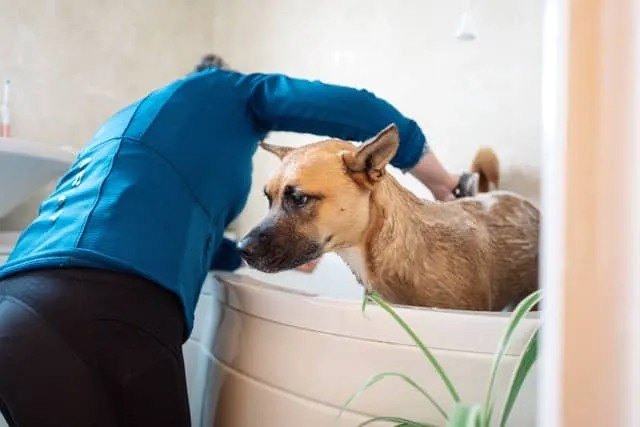
Tips for Safe and Stress-Free Dog Bathing at Home
ath time doesn’t have to be stressful—for you or your dog. With a few vet-approved tips, you can make the experience safe, efficient, and even enjoyable. 🐶🛁
1. Prepare Everything in Advance
Gather all supplies—shampoo, towels, brushes, and a cup or sprayer—before bringing your dog to the bath area. This prevents unnecessary pauses that can stress your dog.
2. Use Lukewarm Water
Water that’s too hot or too cold can make your dog uncomfortable. Lukewarm water ensures a pleasant experience and reduces anxiety.
3. Protect Sensitive Areas
Avoid getting water or shampoo in your dog’s eyes, ears, and nose. Cotton balls in the ears can prevent water from entering, while a gentle hand protects the face.
4. Start Slowly and Calmly
Speak in a soothing tone and move gently. Some dogs need a few minutes to adjust, so let them sniff the area or play with a favorite toy beforehand.
5. Lather Gently, Don’t Scrub Hard
Massage the shampoo into your dog’s coat using gentle circular motions. Avoid harsh scrubbing, which can irritate the skin.
6. Rinse Thoroughly
Leftover shampoo can cause itching or dryness. Make sure every bit of soap is rinsed out, especially in thick or long coats.
7. Dry Carefully
Use towels to blot excess water and, if your dog tolerates it, a low-heat pet dryer. Ensure your dog stays warm and doesn’t get chilled.
8. Reward Your Dog
Treats, praise, or playtime afterward helps your dog associate baths with positive experiences. This reduces stress in future bath sessions.
When to Ask a Vet About Bathing

While most dogs can be bathed safely at home following general guidelines, some situations require professional veterinary advice. Consulting a vet ensures your dog’s skin and coat stay healthy, especially if there are underlying conditions. 🐾
1. Skin Infections or Irritations
If your dog has redness, rashes, sores, or excessive itching, a vet can recommend the proper shampoo and bathing frequency to avoid worsening the problem.
2. Allergies
Dogs with seasonal or food allergies may benefit from specific bathing routines or medicated shampoos. Your vet can suggest products that soothe inflammation and remove allergens effectively.
3. Puppies
Young puppies have delicate skin and immune systems. A vet can guide you on safe bathing schedules and appropriate products until your puppy is fully vaccinated.
4. Senior Dogs
Older dogs may have thinner skin or joint issues. A vet can advise on gentle bathing methods, water temperature, and tools to make the experience safe and comfortable.
5. Unusual Odors or Coating Issues
Persistent odor, greasy coat, or sudden hair loss could indicate health problems. In such cases, bathing alone isn’t enough—vet evaluation is necessary.
Whenever you’re unsure about your dog’s bathing needs, it’s best to consult a veterinarian. Following professional guidance ensures your dog stays clean, healthy, and happy.
Conclusion & Call-to-Action
Bathing your dog is more than just keeping them clean—it’s an important part of maintaining healthy skin, a shiny coat, and overall well-being. While there isn’t a one-size-fits-all schedule, following vet-approved guidelines and paying attention to your dog’s coat, skin, and behavior will help you find the perfect routine.
Remember: observe your dog, use gentle dog-specific products, and consult a vet when needed. With the right approach, bath time can be stress-free and even enjoyable for both you and your furry friend.
Call-to-Action:
Explore more expert tips on dog care, grooming, and nutrition on Boldvist. Subscribe to our newsletter for the latest pet care guides and keep your dog happy, healthy, and well-groomed!